
What Are the Signs That I May Have Mold?
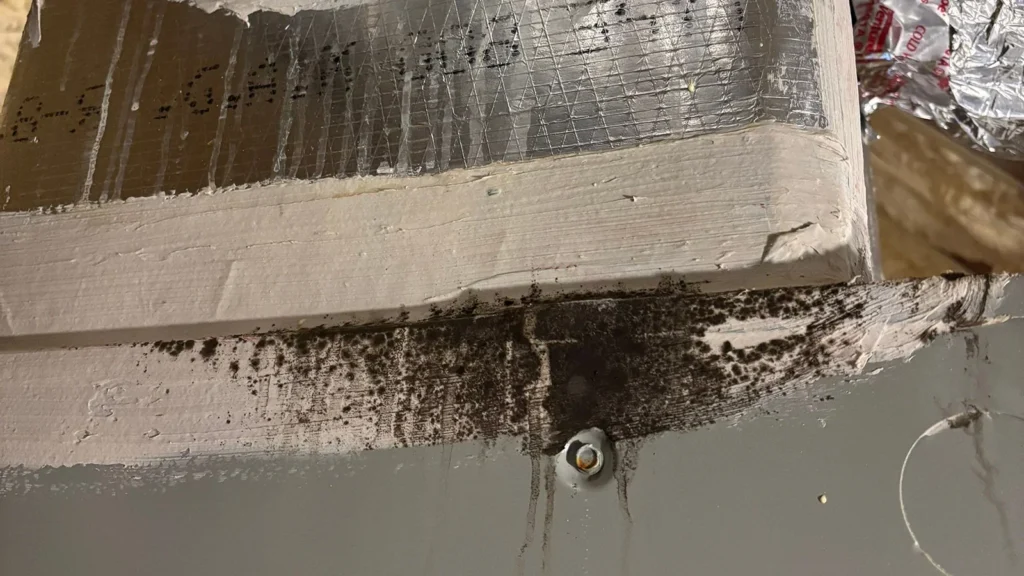
One of the biggest dangers for your home or business is the presence of mold. Mold can do a lot of damage to your physical structure and can causes long-term debilitating illnesses. Mold can even cause cancer.
That’s why mold must be treated immediately.
Mold isn’t one of those problems you can kick down the curb and deal with later. If you don’t deal with your mold problem, it is only going to get worse. And the worse it gets, the most costly the solution becomes – and there’s no telling how much damage is has done to the people and pets who live in your home or work in you business.
There are three ways that can determine whether you have mold
What you see: The visual clues are the most obvious. If you see spots (black, green, white, gray) on the walls, ceilings, around the windows or on the baseboards, you’re dealing with mold. Sometimes you see a discolored are or a stain that looks speckled or fuzzy. Maybe the drywall or wood is warped or there is bubbling or peeling of paint. Condensation is also a visual indication that something is going on.
What you smell: Even if you don’t see any visual sign, your nose may help you detect the mold. If it has that “old basement” or persistent musty odor, that’s almost a guarantee that you’ve got a mold issue. That smell seems to always be present and returns quickly, even after the area is cleaned out. You might notice it more in certain parts of the house, maybe a closet or near the heating vents. Your nose knows! Listen to it.
How your property reacts: Since mold needs moisture, there could be signs that is already forming. Are there water stains on your ceiling or wall? Are parts of the drywall squishy and give way to a slight touch? Does the floor feel uneven or soft? Have you had recent leaks from the roof or windows? Are the carpets or drapes damp? Do you see condensation on the heating and cooling ducts? Don’t ignore these signs.
If this is true for you, don’t delay about calling a trained technician to come and appraise the situation. A trained technician can diagnose what’s going on and set out a plan for you to follow.
A trained technician from First In Restoration has the equipment needed to fix the problem, whether it’s a simple solution or requires a more complicated answer. Depending on your policy, your homeowner’s insurance may or may not provide coverage, but our techs will document the damage and the work performed so you have the information you need for your insurance provider.
If you suspect mold, proper testing is an important step. Mold testing should be performed by an IICRC-certified technician, and samples should be sent to an environmental lab for analysis. This helps confirm what is present and gives the technician the information needed to recommend the proper next steps.
If you suspect mold in your home or business, proper testing is an important step. Mold testing should be performed by an IICRC-certified technician, and samples should be sent to an environmental lab for analysis. This helps confirm what is present and gives the technician the information needed to recommend the proper next steps.
Call First In Restoration. Our trained team can assess the damage, help identify the source of the moisture, and create a plan to properly test and address the mold before it gets worse.
Call First In Restoration today: (678) 483-7284