
What Safety Looks Like on a Restoration Job
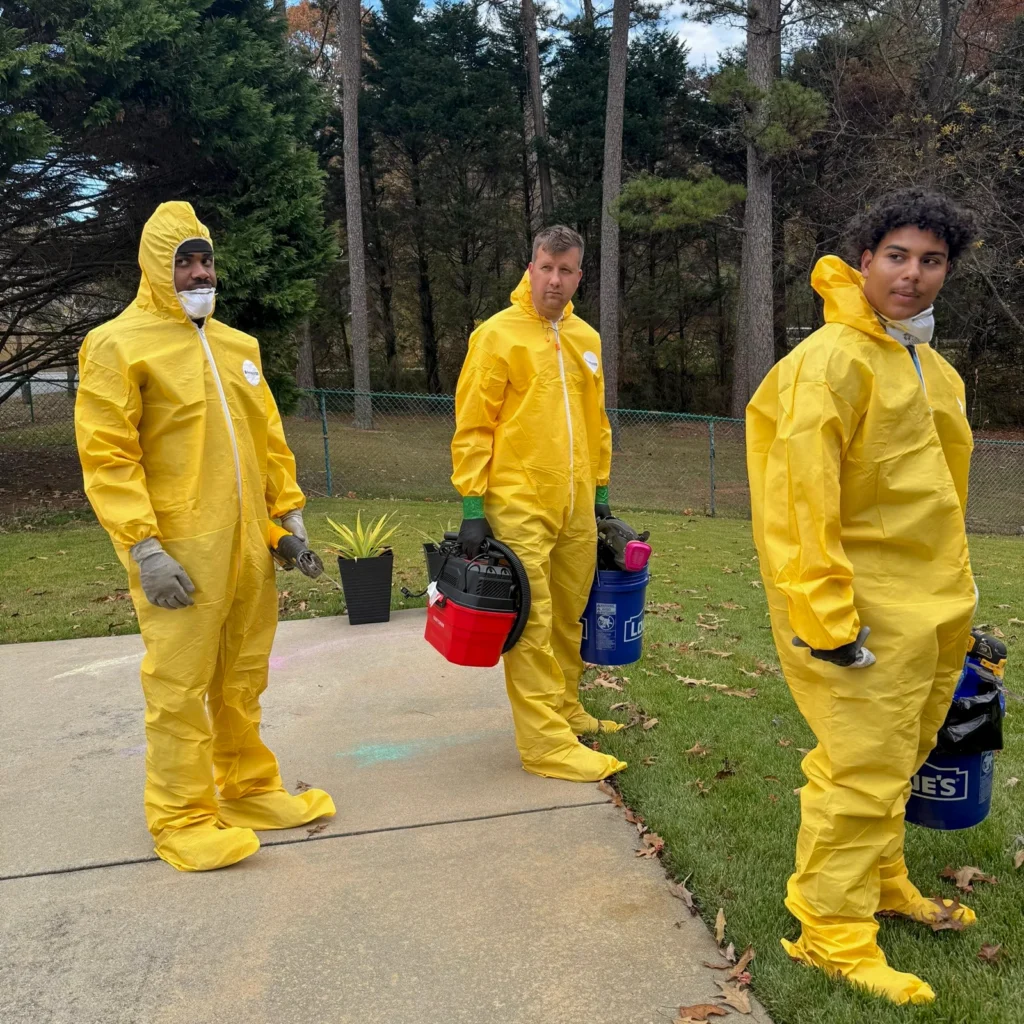
When a restoration crew shows up at your home or business, there’s usually already a mess.
There may be water on the floor, wet drywall, damaged ceilings, debris, mold or sewage. In some cases, there may also be electrical or structural concerns that aren’t immediately obvious.
That’s why a restoration job shouldn’t start with someone simply grabbing a shop vac and getting to work.
It starts with figuring out what we’re walking into.
August 10–16 is OSHA Safe & Sound Week, which makes this a good time to talk about something that is important on every restoration job: keeping the people doing the work (and the people who live or work in the building) safe.
First, identify the hazards
No two restoration jobs are exactly alike.
A clean-water leak from a broken supply line is very different from a sewage backup. A small section of wet drywall is different from tearing out materials after a major flood or fire.
Before work begins, the conditions need to be evaluated so the crew knows what hazards may be present and what precautions are appropriate.
That can include looking for contaminated water, electrical hazards, mold, damaged building materials, slippery surfaces and other conditions that could create a problem during cleanup.
Sometimes the safest thing we can do is keep people out of part of the building while the work is being performed. That isn’t about being dramatic. It’s about not creating another problem while trying to fix the first one.
The PPE has a purpose
If you see a restoration technician wearing gloves, eye protection, protective clothing or a respirator, there’s a reason for it.
Personal protective equipment (PPE) helps protect technicians from the specific hazards they may encounter during a job.
And the equipment can change depending on what we’re dealing with.
Someone working around contaminated water may need different protection than someone handling ordinary water damage. Mold remediation, demolition and fire cleanup can bring their own considerations as well.
The goal isn’t to suit up like we’re going to the moon. It’s to use the right protection for the job.
Training matters just as much as equipment
You can buy safety equipment. Knowing when and how to use it is another story.
Restoration technicians work in environments that can change quickly. Water can travel farther than it appears. Damaged materials may need to be removed. Areas that look relatively harmless can turn out to have contamination or other hazards.
Training helps technicians recognize those situations and respond appropriately instead of guessing.
That matters for our crews, but it also matters for the homeowner, business owner, property manager, employees, tenants and anyone else who may be around the property.
A safe jobsite helps protect everyone
Most customers will never need to know every safety procedure taking place behind the scenes. What they should know is that those procedures matter.
Keeping a work area contained, wearing the appropriate protective equipment, identifying hazards before beginning work and keeping people away from unsafe areas are all part of handling a restoration job responsibly.
When your property has already been damaged, the last thing you need is another problem.
Doing the job right means doing it safely, too.
At First In Restoration, our goal is to help get your property back to normal as quickly and safely as possible.
Need help with water, fire, mold, storm or other property damage? Call First In Restoration at 678-483-7284.